> For the complete documentation index, see [llms.txt](https://docs.tableplus.com/llms.txt). Markdown versions of documentation pages are available by appending `.md` to page URLs; this page is available as [Markdown](https://docs.tableplus.com/llm-plugin.md).
# LLM Plugin
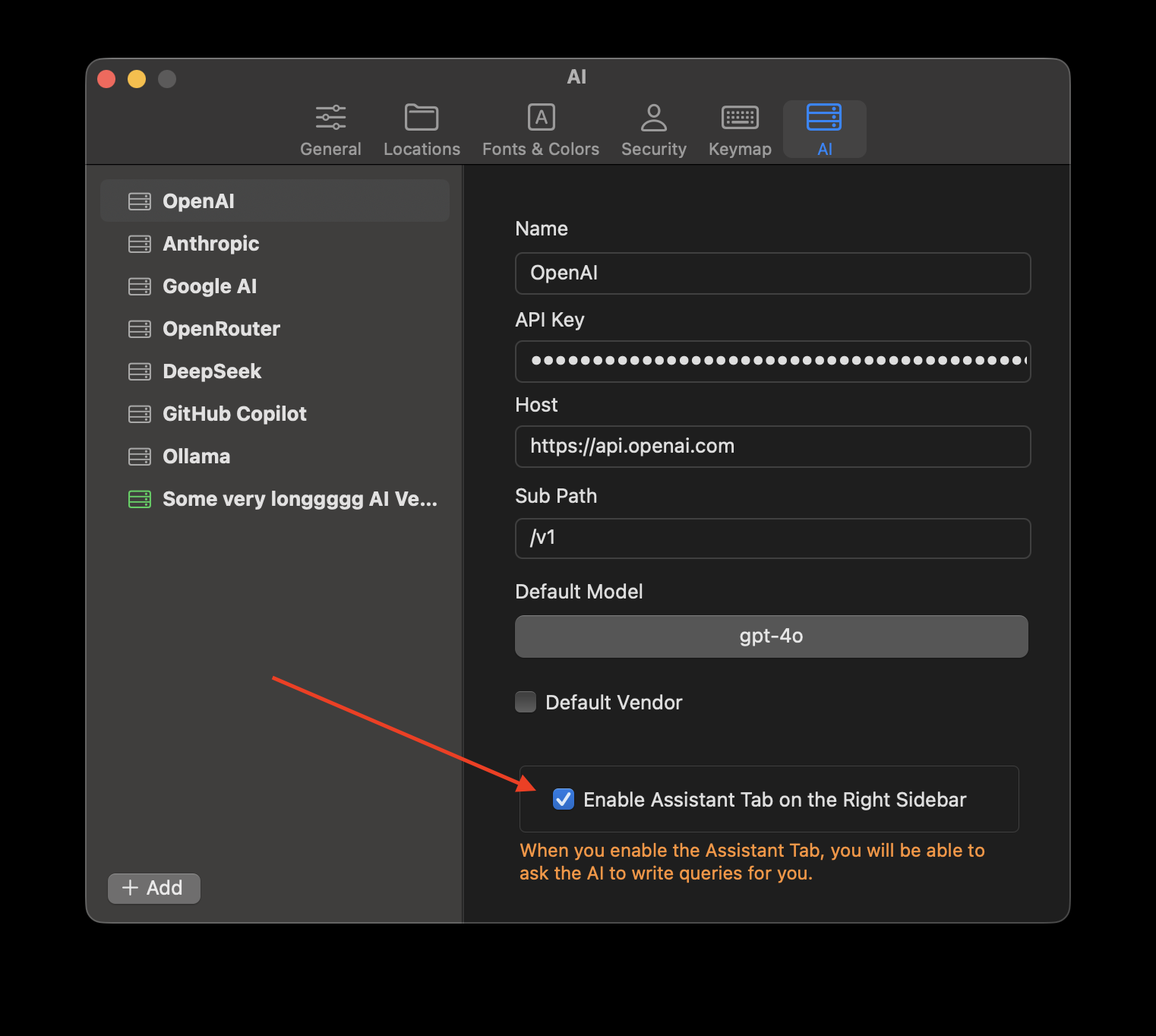
You can enable/disable the LLM plugin in the TablePlus settings. It is enabled by default when you download the app from our website.
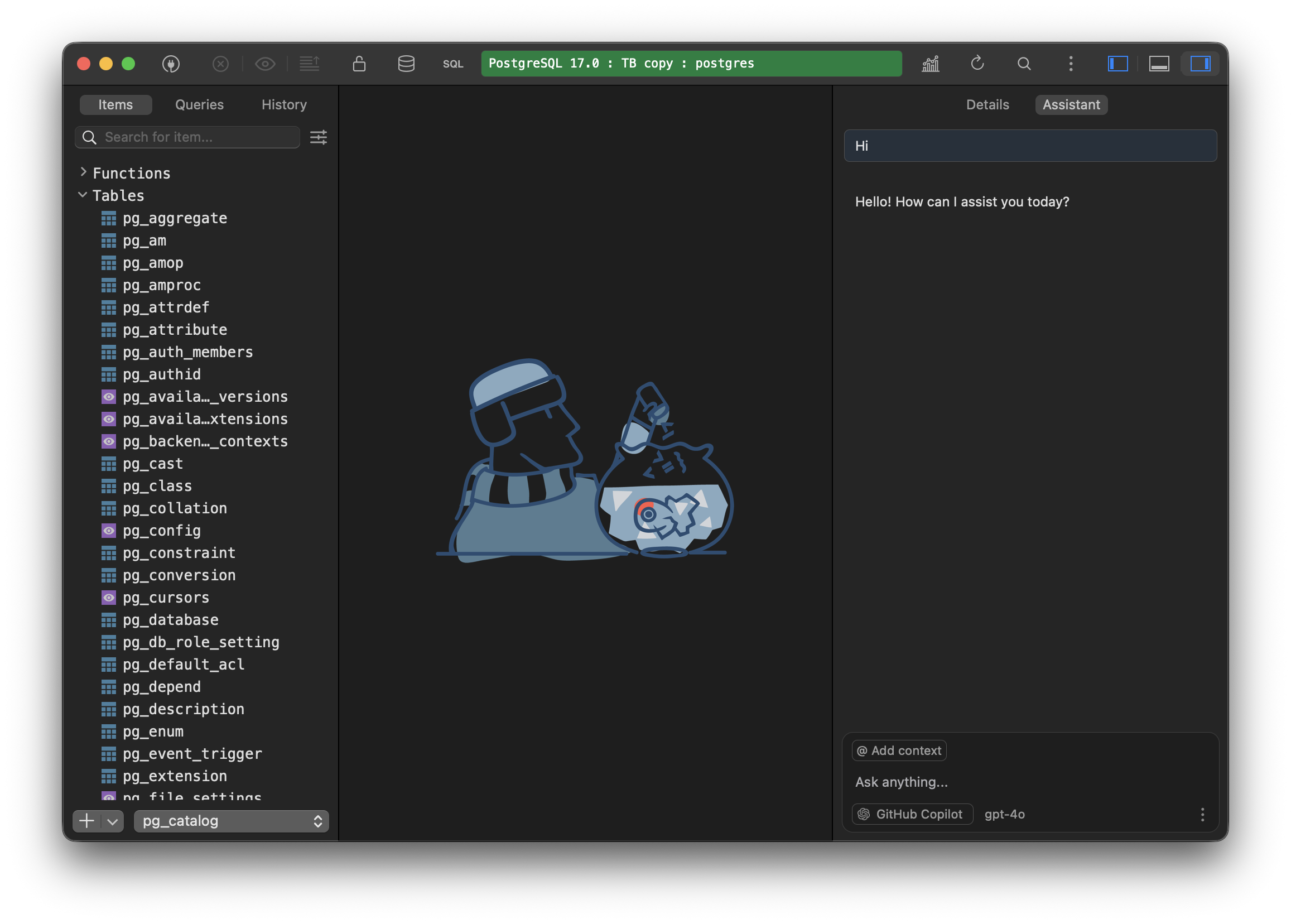
TablePlus LLM plugin is located on the right sidebar
TablePlus LLM plugin is just a chat client:
1. Your data records (data rows) are never sent to the LLM.
TablePlus will never send your data records to a language model, and the LLM does not have permission to access your data—now or ever.
2. Table/view structure (table/view SQL creation) may be shared when using AI features.
When you use the AI feature, TablePlus and the LLM may access your table structure (i.e., the table creation statement), but not the actual data.
3. Secure transmission to your LLM.
TablePlus sends the table structure *directly* to your configured LLM—there is no intermediary involved.
So the security is entirely dependent on your setup. If you block access to the LLM vendors, the TablePlus plugin will not work. The query that TablePlus sends to the LLM depends on your configuration—you can point it to OpenAI, Anthropic, Github Copilot... or a local LLM instance.